

| Changes
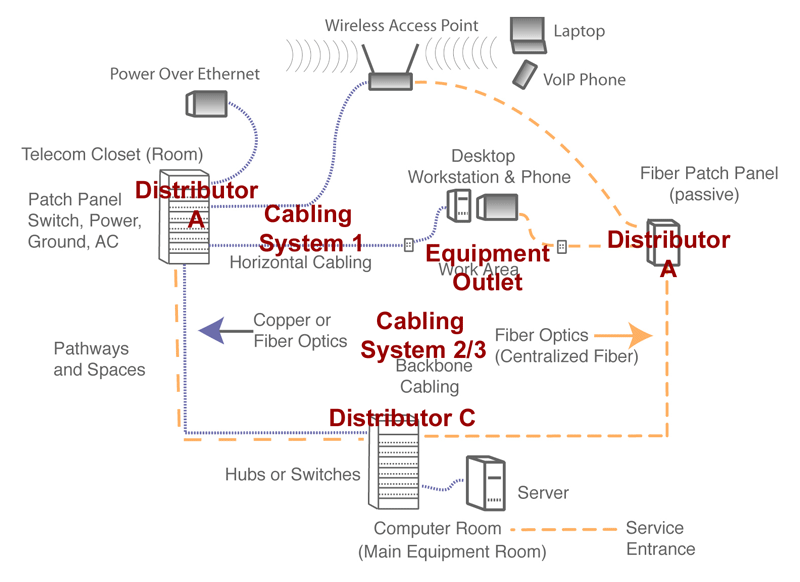
In TIA-568 Standard For Premises Cabling Systems In 2011 TIA changed the nomenclature of structured cabling systems. Many years later, the earlier terms which came from a century of use in the telephone system are still preferred by many in the industry. The terminology in TIA-568-C.0, Generic Telecommunications Cabling For Customer Premises, has changed to a more generic (i.e. not traditional telecom) nomenclature. Current plans are to revise the other T568/T569/T570 documents to this nomenclature in the future. Unfortunately, all this can be confusing, so we'll present the TIA wording and explain our interpretation in CAPS and give you a diagram of our explanation. The traditional terms for the location of the ends of the cabling or interconnections have been changed to "connection points." Distributor C: Initial or central connection point in a hierarchical star topology. EQUIPMENT ROOM OR MAIN CROSS CONNECT Distributor B: Intermediate connection point between Distributor A and Distributor C in a hierarchical star topology. AN OPTIONAL SECOND PATCH IN EQUIPMENT OR TELECOM ROOM OR MEDIA CONVERTER AND/OR REPEATER Distributor A: Intermediate connection point between Distributor C and Equipment Outlet in a hierarchical star topology. HORIZONTAL CROSS CONNECT, e.g. TELECOM ROOM or ZONE MUTOA Equipment Outlet: Final connection point in a hierarchical star topology. WORK AREA OUTLET In a typical commercial building, Distributor C would be the main cross-connect, Distributor A would be the horizontal cross-connect, and Equipment Outlet would be the telecommunications outlet (TO. ) Distributor B is optional and not often used. Connecting these points are "cabling subsystems" defined as: Cabling Subsystem 2 or 3: Cabling between either Distributor A and Distributor C or Distributor B and Distributor C. BACKBONE Cabling Subsystem 2: Cabling between Distributor A and Distributor B. CROSS CONNECT Cabling Subsystem 1: Cabling between Distributor A and Equipment Outlet. HORIZONTAL In addition, some of the definintions have changed: Centralized cabling, Fiber optics with a direct connection from the equipment to user is defined as: A cabling configuration from Distributor C to a centralized cross-connect using pull through cables, an interconnect, or splice at Distributor A. Consolidation point: A connection facility within Cabling Subsystem 1 for interconnection of cables extending from building pathways to the equipment outlet. These drawings illustrate some of the options within the standard architecture. Below is the "traditional" view of TIA-568 architecture: 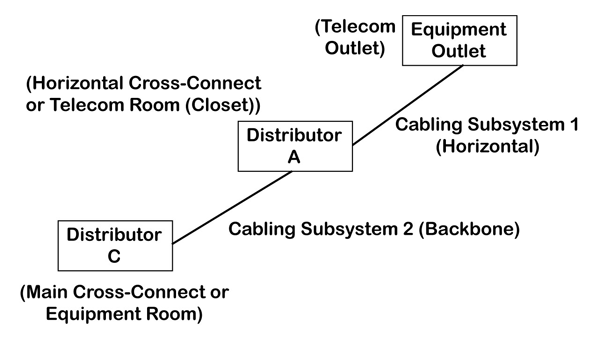 Distributor B is optional and can be used for a connection, e.g. fiber splices, or media converters: 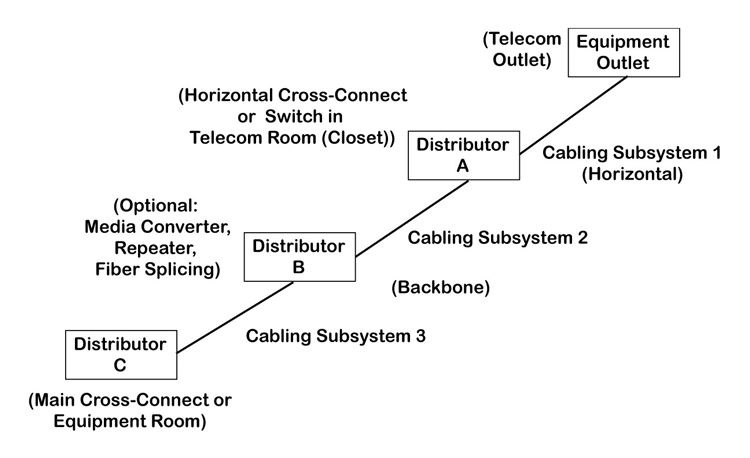 In fact, no intermediate connections are required, e.g. centralized fiber: 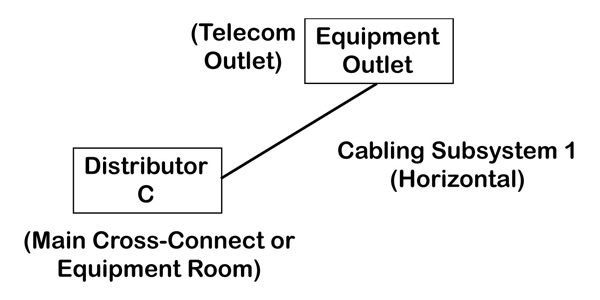 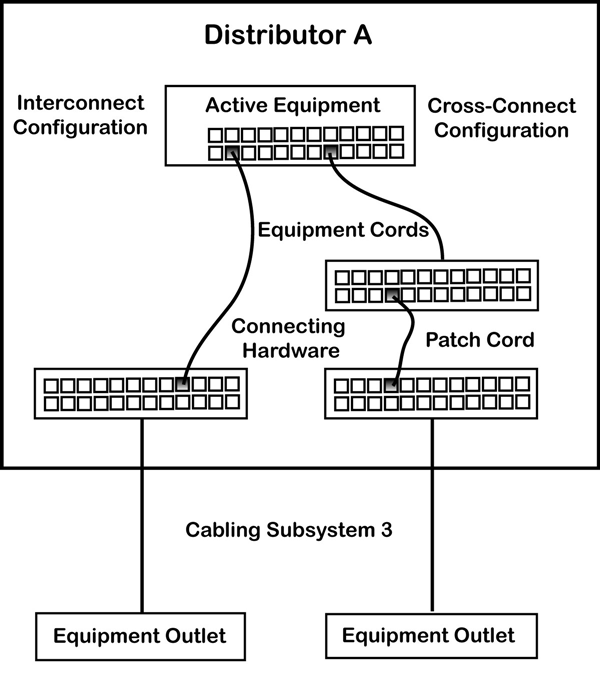
 Premises Cabling Website Contents Each page will open in a new window. Overview of Premises Cabling and Standards |
|
|